Top 5 Online Spreadsheet Applications

Whether you need to keep track of finances for your household, run complex spreadsheets for your business, or keep a list of your favorite types of beer, a spreadsheet can save the day.

If you don’t want to be tied down to desktop versions of spreadsheets and want to be able to work on a spreadsheet no matter where you are, there are many online applications available. For those who need to collaborate or share data with others, an online spreadsheet can be a useful tool.

onlinespreadsheets-400x400

Here are five options that will have you taking your data to the cloud:

  • Google Docs – A major contender among the list of online spreadsheet apps, Google’s spreadsheet is similar to the more familiar Excel and is shareable with others.
  • Zoho – You can create, edit and share spreadsheets. The sharing options allow you to work with others on spreadsheets in real time. Import your Excel spreadsheets and export spreadsheets created to Zoho in the various formats available.
  • EditGrid – Considered to be an online version of Excel, EditGrid has the same look and feel of the desktop application as well as sharing the standard spreadsheet features. You have the option of syncing your spreadsheets to your desktop and sharing with others. There is even a built in chat function that allows you to send messages to others you may be working with.
  • ThinkFree – Create, view or edit worksheets. ThinkFree Calc also comes with the standard spreadsheet features and gives you the ability to create advanced worksheets.
  • Grid – This visually appealing spreadsheet is made for the iPhone and iPad. Grid works like a spreadsheet, but it’s not just about numbers. According to the creators of Grid, it is about to-do lists, grocery shopping, planning and organizing the things that matter in your life. Although the current version of Grid does not have the ability to run spreadsheet calculations, it is slated to be included in future versions. Don’t worry, the CEO and designer of Grid is Josh Leong, designer of Microsoft’s Excel 2013, so he should know something about spreadsheets. Grid is available June 6, 2013, in the Apple store.

About the Authors

Google Fiber Speed: What You Need to Know

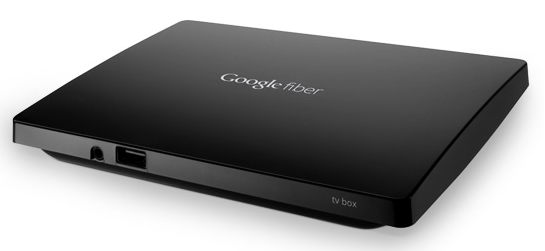
Google Fiber, first announced by the company in 2010, promises connection speeds 100 times faster than any basic broadband service currently available.

The speed of your Internet connection can have a major impact on your online needs. As the amount of movies and shows increase on streaming services such Netflix, Hulu and other on demand sites, it’s easy for a slow connection to ruin movie night at home.

Google Fiber Speed: By the numbers

The average Internet speed in the U.S. is 7.4 megabits per second (Mbps), according to a “State of the Internet Report” released by Akamai Technologies. It seems that the U.S. has some catching up to do in this department.

According to Akamai’s ranking, South Korea comes in first on the list with a connection speed of 14 Mbps. The U.S. came in at number 8, ranking behind Japan, Hong Kong and Switzerland. About 19 percent of the Internet connections in the U.S deliver speeds over 10 Mbps.

google-fiber

Buffering: Ain’t nobody got time for that

Google Fiber promises speeds 100 times faster than basic broadband connections. Slate reporter Farhad Manjoo had the opportunity to speed test and saw a demonstration where a computer was able to get download speeds of 938.24 Mbps and uploads of 911.67 Mbps. Videos showed in HD played almost instantaneously. There was no buffering to be seen.

If this doesn’t fill you with fiber-envy yet, then imagine being able to download huge files in seconds or watching a high definition movie without any skips or sputters.

For now, Google Fiber is available in Kansas City, Kansas. Additional cities have been added and received the nod from Google to also receive service, including Austin, Texas.

A future with 1-gigabit Internet, like Google Fiber is offering, leaves much to the imagination. The future is now it seems, but are you ready?

About the Authors

Business T1 – Reliable, Highly Secure and Unbound by Distance

Business T1 is widely available and highly secure.

Are you moving to a new office space that requires a new business T1 installation, or has your business outgrown its bandwidth needs and now requires a high-speed T1 Internet service? If your slow, interrupted Internet connection is holding your business back, it may be time to upgrade to a business T1 line.

business-T1

The Upside of Business T1:

  • It’s reliable, highly secure and unbound by distance restrictions associated with other forms of Internet services.
  • A T1 delivers an uncongested and uninterrupted Dedicated Internet Access (DIA) and is widely available and highly dependable
  • The T1 (or T-1) carrier is the most commonly used digital transmission service in the United States. It was originally developed in the 50s to replace interconnecting analog telephone lines with the purpose of increasing bandwidth.
  • A T1 consists of 24 separate channels using pulse code modulation (PCM) signals with time-division multiplexing (TDM) at an overall rate of 1.54 Mbps. The ability to deliver unencumbered 1.54 Mbps is what makes business T1 so unique. A subscriber to T1 will never have to compete for bandwidth and will experience a consistent High-Speed Internet that’s best in class and quality.
  • Ethernet cannot span the long distances that T1 can provide, which can also be a major issue.

The Downside of Business T1:

  • A T1 can be perceived as bandwidth overkill, so it makes sense for your budget to contract the exact bandwidth service you need with the option of upgrading at a later date.
  • A T1 can be very expensive, so if it’s money you’re trying to save, a T1 should not be your first choice.

T1 is a reliable and efficient bandwidth solution for businesses

A T1 delivers an uncongested and uninterrupted Dedicated Internet Access (DIA) and is widely available and highly dependable. With a T1 Line, your business is able to function at peak efficiency levels. Productivity will be at an all time high once your install your T1.

About the Authors

The Best Small Business Internet Providers

Small Business Internet can help your Startup Business.

Today, savvy technology Entrepreneurs and their teams have sky rocketed start-ups to global success. Think: Google, Amazon, EBay, Pinterest, CloudEra, and Facebook. Equally impressive are the innovators creating sites like Etsy, or solar and renewable energy solutions, better healthcare through “telemedicine” and locally-based restaurants or start-ups adding value to the community. None of these tech Start-ups would’ve been possible without small business internet.

start-up2

High-speed Broadband:  A Start-ups’ “Tool DeForce”

Small Business Internet is now a standard, critical business tool. Connecting to email and voice communications, powerful cloud-based applications, or a remote workforce enables Start-up businesses to compete in the same arena with larger, more established companies. The challenge is dedicating time to reviewing the large-volume of options, sourcing the best ISP, highest Internet speed, and critical business services like voice and security – all within the Start-up budget.  At Bandwidthplace, we’ve compiled a few steps to help you get starting to get the Internet service you need at a price you can afford.

Top 3 Steps to Simplify Getting Small Business Internet

Step 1: Estimate how much Bandwidth your business will use. This will provide a rough estimate of the minimum amount of bandwidth required.
Step 2: Determine how many employees will use the application at the same time.
Step 3: Multiply the application bandwidth # of Users using applications at the same time.

Small Business Internet can save your Startup money

Studies show that high-speed small business internet can save your startup over $16K, in particular accounting, printing, phone service and website development:

  1. Online Accountant Services: traditional accounting and bookkeeping can cost a startup a lot of money when including tax preparation. With High-Speed Internet, innovative software can potentially save you 87.3% in annual savings.
  2. DIY Marketing Materials: business cards, letterhead, envelopes and brochures are essential to communicating professionalism. Traditional printing prices do not include design and logo work, while online services have do-it-yourself designs that are included in the pricing, 43.2% in potential savings.
  3. VoIP: entrepreneurs have multiple choices when deciding on a phone system, and competition is lowering line fees and long distance. VoIP is a clear alternative now for startups, offering significant savings with sometimes free set-up and headsets. A potential of 62.1% in savings.
  4. DIY Website Design: new businesses have expanded choices in terms of website design and hosting, with do-it-yourself website design reducing costs substantially—and most estimates include hosting, email, do-it-yourself site builder, ecommerce, SEO, social media, Google AdSense and more. A potential of 87.5% in savings.
  5. Mobile: now your business can save time and money with mobile applications. Save time, reduce costs, increase revenue and productivity, work more effectively and better serve your customer base. Now it seems there’s an app for almost every business need.
  6. Specialty Logo Service: the right logo is important, but how much should it cost? The business logo designs from online forms can save you incredible money, about 91.6% in potential savings.
  7. Do It at Home: broadband High-Speed Internet has made the home office a savings opportunity for startups. Office space, from small to exclusive, runs high rental costs when compared to the home office—which rents for zero.
  8. Online Incorporating: get legal protection of your assets; in addition with an S Corporation or LLC, get legal protection without additional tax costs. But what about those lawyer fees? Services like LegalZoom.com, Nolo.com, MyCorporation.com, can get the startup entrepreneur incorporated for less than $300 plus state fees.

The Truth Regarding Small Business Internet Solutions for Startups

Your startup will most likely fail miserably without solid small business internet. It can literally make or break you when applied to your startup costs, profitability, functionality and social reach. This is very important! Do not skimp on bandwidth!

Now, better bandwidth is not just speed. Speed can sometimes refer only to “download speed” and that’s usually a measure of consumption, not production.  So don’t ignore upload speeds!

Video files, CAD files, high-definition photo files and database files—these are all very large, and it’s likely your startup will include designers, marketers, architects and engineers that need to transport these files from computer-to-computer.

Lack of good bandwidth may not prevent home-based and small firm activities, but don’t expect your business to grow, because small business internet provides the platform and the foundation for constant growth. So, make sure you do your homework. Take an Internet speed test and track the price and upload speeds offered to your business.


About the Authors

Business Internet Packages for The Growing Business

You’ve measured yourself against the competition, enhanced your customers experience, cozied up with vendors, expanded your niche and developed new channels. You’re doing great! So why is your small to medium business still using sub-par bandwidth? Plus, are you familiar with the business internet packages available at your location?

small-business

What are SMEs and SMBs?

SMBs usually start at a single location with several employees, i.e., the glory years, to large enterprises growing their employees, adding remote locations and expanding applications. All of this growth requires more networking and additional broadband. As your business grows, it’s essential to balance your costs with your growth strategies. Getting cost effective broadband that is scalable with the ability to add services—such as security, voice and cloud computing—is paramount.

Some Principles for Growing your Small Business

Timing is everything! How you time your product for market and include the unpredictability of your market—plus accepting the limitation of your resources and the risk of emerging competition—will decide your readiness. SMBs have the advantage of being able to make quick decisions and implement changes without the challenges of a bureaucracy with a conflicting point of view.  You need to anticipate your market and provide the adequate technology solutions to make your own needs—and your customers’ needs—all within credible reach.

Technology is fulfilling the needs of SMBs radically, with very few barriers in an age where you can run your business with a smartphone or tablet. You need to create the right blueprint that connects your business model with the adequate technology. So, consider the fundamentals first and get a specific scalable broadband plan for your small business.

Scalable Broadband for Small to Medium Companies

A product and a brand is not enough. It takes repeatable sales to create a scalable business. To identify, design and implement repeatable sales, you’ll need a scalable broadband solution that incorporates a plan for growth. Broadband solutions for SMBs usually include:

  • High-Speed Internet as fast as 100 Mbps downstream and 5 Mbps upstream
  • Basic dial tone (POTS) to analog telephones
  • Simple telephone key systems
  • Long distance and toll free calling
  • Hosted solutions for phone lines
  • Domain registration and webhosting
  • Business video to entertain your customers and employees

Cable Broadband for the Small Business

You want to get the most for your dollar when it comes to bandwidth for your SMB. You need to serve your customers, discuss business with your suppliers and commit to your deadlines. Speed has to go beyond download; you’re going to need a flexible provider with a rock solid Internet connection.

More bandwidth will increase your productivity with shorter download times. A T1 with 1.5 Mbps download takes hours to download a 1.8 GB video file. A good 100 Mbps takes minutes. Plus, get business tools and services included like Norton Security, Microsoft, website hosting and more.

When all is done, your Business Internet service can keep you focused on what really matters—your SMB and its future growth.

About the Authors

WoW Lag Interrupted-World of Warcraft Latency Issues Solved

WoW lag can be the hardest monster to defeat in the MMORPG World of Warcraft. This creature can be taken down, but it is important to know where it comes from. It is caused from inadequate hardware or an ineffective Internet connection. Its true name is latency, which is not the same thing as bandwidth.

Bandwidth is the speed with which data is transferred to a computer or network. The speed is determined by the technology used by the sender and the receiver of the information. Latency can essentially be anything that limits the data flow to the computer or network. Bottlenecked data, or latency, can be caused from hardware, excessive multiuser usage of the network or even solar flares. If the data is transmitted via satellite or through a wireless router, then clouds and distance can also cause latency issues.

Connected-world-550x350

Battling WoW Lag

Battle.net, World of Warcraft’s website, considers latency over 300 ms to be high, but many players that are raiders and PvPers would argue that anything over 30 ms is poor. It really only matters if it is affecting the game play. Players running solo to enjoy questing content won’t really be affected by a 300 ms latency. When checking latency (make sure you perform an internet speed test first), remember that there is a home latency and a world latency. If the world latency is high then there is nothing that can be done.

Here are a few quick tips to help find where latency is coming from. World of Warcraft players can find more detailed information at the link noted above.

  • Custom UI conflicts – Players have the option of adjusting their video controls for a better playing experience. Some of the options can weigh heavy on the computer system and cause internal latency issues.
  • Connection type – Wireless always adds latency to bandwidth because other signals can be picked up and they have to be ciphered properly. Test different types of connections to see how your bandwidth performs.
  • Configure router and firewall – Both of these create an added layer for the system to process. The more hardware and software used to require the data to pass, the more latency is added to the throughput.
  • Third party apps – These can cause two separate issues: if the app is graphic-intensive, it will be utilizing memory from the video card; if the app accesses the Internet, it can be “stealing” bandwidth from World of Warcraft.
  • Hardware – The network and video cards are going to be the main culprits here. Make sure all recent drivers are installed and there are no conflicts.

WoW lag cannot be defeated, but following a few of the steps above can help to knock it down to a respectable size.

About the Authors

Improving Your Online Multiplayer Game Experience: The Need for Speed

As of Activision-Blizzard’s last earnings call in May, their massive online multiplayer game World of Warcraft has 8.3 million paying customers. Yes, this is down from its heyday of 12 million subscribers, and down even from 9.6 million in February of this year, but these numbers still put the fantasy role playing game leaps and bounds ahead of the competition. Or consider online console super-shooter Call of Duty: Black Ops II: according to its official website, players have logged on and shot down friends and enemies alike over 125 billion times since the game’s debut in November 2012. Despite the difference in genres — slaying Orcs with magic versus running and gunning enemy troops — these huge multiplayer experiences have something critical in common: speed is king.

Old_speed_limit_sign-460x640

Killed by the Lag Monster

Ask any online gamer what frustrates them about their favorite game, and be prepared for a long conversation. Ask about the single most irritating aspect of online gaming and they’ll likely say “lag.” The term is a catch-all for the slowdown experienced when either the game server or a user’s local Internet connection encounters a problem. This can mean the difference between victory and defeat.

A game like WoW, for example, has a fairly low bandwidth requirement. Gaming site WoW Insider talks about the game typically hovering around 2 kilobytes per second (KBps), and peaking around 30 KBps during massive fights or when zoning into a player city. COD, meanwhile, is typically a console gaming affair. According to Kotaku, the newly announced Xbox One is supposed to rely on cloud computing for its backend, but already there are concerns about what happens if the cloud has a hiccup. Do you miss a headshot as a result?

Time to Upgrade?

In some cases, the problem really is at the other end. If WoW’s servers have a blowout or Microsoft’s data center catches on fire, your gaming experience will suffer and there’s not much you can do except get a snack and maybe watch a movie on Netflix. Sometimes, though, the problem really is yours. The old “reboot the router” trick is a good place to start, but if you’ve exhausted all obvious options, it might time to see what kind of performance your Internet connection is actually delivering. Bandwidthplace.com offers a free test that you can use on any device for download and upload speeds, letting you see how well your current provider caters to gaming needs. The site works with desktops, consoles and mobile devices of all types, so you can make sure problems with gaming on a PC, for example, aren’t hardware related but indicative of a connection issue.

The solution for slow Internet is the same as doing more damage in WoW or becoming a better solider in COD: Level up. Every online multiplayer game is unforgiving when it comes to lag, external or internal. It’s worth your time to make sure your speed is up to snuff.

About the Authors

Satellite Internet services – Robust enough for a business solution?

Today, yes. Advancements in Satellite Internet Services are Impressive.

Satellite technology touches the vast majority of how we consume content today. Think: Streaming 3D and HDTV, Satellite Internet, and mass content delivery to smart phones. Satellite Internet is critical, and often the only solution, for keeping remote business locations and employees connected. Adding to the mission critical uses of satellite internet services, the technology is widely utilized in military operations where troops are deployed in highly remote on and off-shore locations.

Satellite providers and technology vendors are rapidly advancing new generations of satellite Internet technologies. Solutions to latency issues and rain fade (slowing of the Internet in bad weather) are taking remote business connectivity to the next level.  Today, businesses using satellite Internet can experience connectivity that is closer to a DSL or cable connection.  Applications like VoIP, video streaming, and web surfing are now possible with these technology improvements.

satellite-business

So, Satellite Internet travels 90,000 miles each away?  Just how fast can it get?

Providers, like Hughsnet and ViaSat, are offering speeds of up to 15 Mbps down and up to 3 Mbps upstream.  These are huge speed upgrades that were only 1.5 Mbps down or a very low 256 Kbps upload just a short time ago.  Businesses like Dish, JetBlue, and Continental Airlines will utilize these new, fast Satellite Internet services to deliver far more robust connection to consumers.  Compare the Internet connection you are using now to see how close Satellite is getting to standard broadband speeds!

Pricing and Installation

The good news is that prices have come way down for satellite.  Compare plans and pricing using the “Get More Speed” tool or research “Business Satellite Providers” to compare plans.   Installation is fairly straightforward but can be time consuming.  Work with your Satellite Internet provider to determine the coordinates of where you plan to place your satellite dish.  Your provider will then evaluate the satellite’s orbital path to finalize the best location for your satellite equipment.

Upside of Satellite Internet services:

  • Satellite is available virtually everywhere.
  • Technology advancements offer higher speeds at lowers costs.
  • Broadband services traditionally have low up-front costs for equipment and installation.
  • Business-grade service provides speed and reliability. Upgrade speeds without changing equipment.
  • Add users and locations with ease.
  • Improvements in satellite offer stability in inclement weather.

Downside of Satellite Internet services:

  • Satellite is slower than cable and DSL.
  • Obstacles like trees, mountains and severe storms can interrupt a satellite signal.
  • Satellite Internet service providers limit the amount of bandwidth per customer.
  • Plans typically include metered usage based on GB used and time of day.
  • Business connectivity can be interrupted in very severe weather.

Top Markets using Satellite Internet Services Today:

  • Telecommuters
  • Airlines
  • Maritime
  • Retail, Financial, Telemedicine and Education
  • Military
  • Disaster Recovery and Homeland Security
  • Energy, Oil and Gas
  • Remote Monitoring or SCADA

The Future of Satellite Internet Services:

Satellite Internet and satellite technologies will continue to receive priority and funding from both global governments and the private sector.  In the coming year, we anticipate smaller equipment sizes, higher bandwidth speeds and a further reduction in costs as Satellite Internet technology becomes more efficient.

About the Authors

T3 Line Providers: T3 Internet Speed for High Bandwidth

Grow Your Broadband with a Business DS3 (T3).

T3 Line Providers (DS3) provide a highly-reliable solution for companies with high bandwidth demands to transfer large files, host video or  multiple websites or add high-quality voice services.  T3, or DS3, lines are also backed by Service Level Agreements that guarantee business performance.  A DS3 line can be increased incrementally, up to 45 Mbps, and gives businesses scalability that is rivaled only by Ethernet. As a business demands more and more bandwidth, growing companies most often get started with a fractional DS3 and expand to a full 45 Mbps. Most corporations expanding beyond the limits of their T1 line and NxT1 service opt into a fractional DS3 with speeds up to 6 – 9 Mbps, and scale as needed.

DS3 Pricing and Availability

Often, IT professionals deploy a DS3 line to create point-to-point, Internet, Frame relay, or voice and DS3 VPN connections. Pricing fluctuates based on the T3 line provider, local loop and port charges.  BandwidthPlace Business Consultants provide a no-cost service to evaluate your DS3 requirements and give you options for the best T3 Line Provider, plans, and pricing for your location. Visit our “Get More Speed” tool to request information from a Bandwidth Expert. We take a non-sales, consultation approach for BandwidthPlace.com visitors and your contact information is never provided to a third party aside from obtaining pricing and service availability.

fiber-optic

Upside of T3 Line Providers:

  • Reliable, high-speed Internet with massive bandwidth.
  • Pro-active monitoring and maintenance service is standard.
  • Service Level Agreements (SLAs) ensure quality business performance.
  • Most DS3 services include professional installation and online management tools, plus 24/365 support.

Downside of T3 Line Providers:

  • A T3 can be expensive for a full 45 Mbps—so it makes sense to contract the exact bandwidth service you need, with the option of upgrading.
  • Ethernet may offer a better solution for scalability beyond 45 Mbps.
  • Pricing (loop charges) fluctuate based on distance from the edge of the carriers network.

A typical DS3 (T3 Line Providers) installation includes two technician visits

An expert technician will conduct two appointments to determine inside wiring needs and finally the installation:

  • Site survey appointment: Once an order has been booked, a technician will visit the site for cabling needs and CPE placement.
  • Installation appointment: A technician will perform needed wiring and installation.

A DS3 / TS3 Wrap-up

A DS3 (T3) service delivers on scalability, price and bandwidth speed from 6 Mbps to a full 45 Mbps.  The service is backed by Service Level Agreements to guarantee you get the performance required for business applications.  Research multiple T3 line providers to get the best pricing and Service Level Agreement.

About the Authors

What Business DSL Speeds are Available at your Location?

Internet Service Providers offer a range of Business DSL speeds.

A key advantage of Business DSL (Digital Subscriber Line) is that it is now widely available and cost-effective. Most Internet Service Providers offer a range of Business DSL speeds adequate for connecting small to medium-sized businesses and remote workers.  When it comes to business connectivity, DSL and Cable are two technologies that you should research to find the best fit for your broadband needs.  Many providers also offer bundled services that include Internet, TV, and Voice that could save your business money.

DSL-business

Pricing and Availability

Pricing varies greatly between providers and plans. There are plenty of online tools that will evaluate the services available at your location.  When researching, we recommend considering the best promotions as part of your comparison. Many DSL providers offer fairly attractive introductory offers. BandwidthPlace Business Consultants can also assist in your research. Our service for Bandwidhtplace.com visitors is always free and we take a non-sales approach when recommending services. Check out our “Get More Speed” tool and let us know about your business requirements.

Upside of a Business DSL:

  • High-Speed Internet at a significantly lower cost than a T1 line.
  • Business DSL has scalable options that allow for multiple speeds and configurations.
  • Business DSL speeds are generally very stable and highly reliable.
  • Virtual Private Network (VPN) service, IP VPN remote access, plus plenty of Teleconferencing and VoIP service options are available with DSL packages.
  • DSL providers are always expanding their coverage.
  • Inexpensive equipment, setup and service.

Downside of a Business DSL speed test:

  • DSL is not the fastest option. Other types of broadband offer faster speeds.
  • Dedicated DSL is available, but if you are on a standard DSL shared line, your speeds will fluctuate.
  • Availability is distance sensitive based on your business location and the Provider’s facilities.
  • With shared DSL, if your phone line is down your iP services will be interrupted.

What’s the difference between ADSL, Dedicated ADSL and SDSL?

ADSL is asynchronous DSL—a type of Internet service commonly used in homes that provides faster download speeds than upload. The speed is to support users who frequently download large amounts of data. ADSL uses telephone lines to send and receive data at high-speeds, while still allowing users to talk on the phone. ADSL is typically not as fast as cable Internet and is not accessible to all customers (specifically rural locations).

There are multiple versions of ADSL, like ADSL2 and ADSL2+ that have higher Internet speeds—rates from 12 to 24 Mbps for downloading. There’s also Rate Adaptive DSL (RADSL) that can adapt to specific lien conditions and change bandwidth speed accordingly; and Very High Bit-rate DSL (VDSL) that offers download speeds up to 52 Mbps—but is extremely location specific.

DSL is a shared connection, similar to cable, so if multiple businesses close your your location are using it, it will slow down. Dedicated ADSL or SDSL is a dedicated line, with guaranteed DSL speeds. This is ideal for businesses that use VoIP, because voice runs over the same connection and uses significant bandwidth. SDSL is symmetric DSL, which offers symmetric bandwidth upstream and downstream, i.e., same upload and download speeds, and is ideal for businesses that transfer lots of data and prefer not sharing the line with voice.

Business DSL Wrap-up

Overall, DSL is reliable, affordable and scalable. It’s ideal for SMBs and home offices that download large files, use cloud-based applications, or require high-speed Internet access for day-to-day business operations.  Business DSL is ideal for companies between 1 – 100 employees looking to improve their bandwidth service.

About the Authors